


E. Writer

E. Writer That had to be really cool. I had an experience back in 2007. I used a digital camera and placed a telescope lens over the camera lens and aimed it at the sky. I took a lot of pictures, and I saw these odd shapes, a bit fuzzy like TV snow but not as buzzy and close together. Some deep reds, etc. It was hard to see because the sky was dark. Some had odd shapes. So I had myspace at the time and I uploaded the images, while joking that I had captured an alien aircraft and zoomed in one some of the shapes. What I realized in hindsight was that, I was probably looking at stars and other celestial bodies with the extra zoomed in images that I took. I saw similar shapes on a show about the universe years later. I have tried to recreate the shots I took over the years with other cameras and telescope lenses, but I have never been able to do it. Even worse, that digital camera was nowhere near as close to as advanced as cameras today, including our phone cameras.

Alex Morton I was on the balcony a few years ago with my wife's cousin, John Moraitis, an actor who now lives in London and we were celebrating a call he'd just gotten gotten from his agent that he'd be playing the part of Lear in a production that would be touring England and then travelling to Japan. It was a night of celebration. As he told me about his joy, a huge, very bright object streaked across the sky, like nothing we'd ever seen. We never found out what it was, but every time I see him, it's the first thing we talk about. An interesting sidelight to this is that Mark Antokas, an old friend, just published a book called Another Noel about when they were young and he and John sold Christmas trees together on the streets of New York.
E. Writer Ahhh, the beauty and splendor of not being besieged by artificial light. I live in a state that is not besieged by too much light pollution but the problem is that we have cloudy skies, almost always at night. And so many trees, that I can never get a good angle. My backyard is pitch black at night. It's only a little over a quarter acre, but because there's nothing back there it's so dark. But with all of the trees back there towering, I can't get a good look at stars, which has rendered my telescope from every position almost useless. I have thought about going to the lake one night to point the camera, but there's the background skyline that would interfere.
Alex Morton
I shot the cover picture for Somewhere Else from my front yard in Ikaria.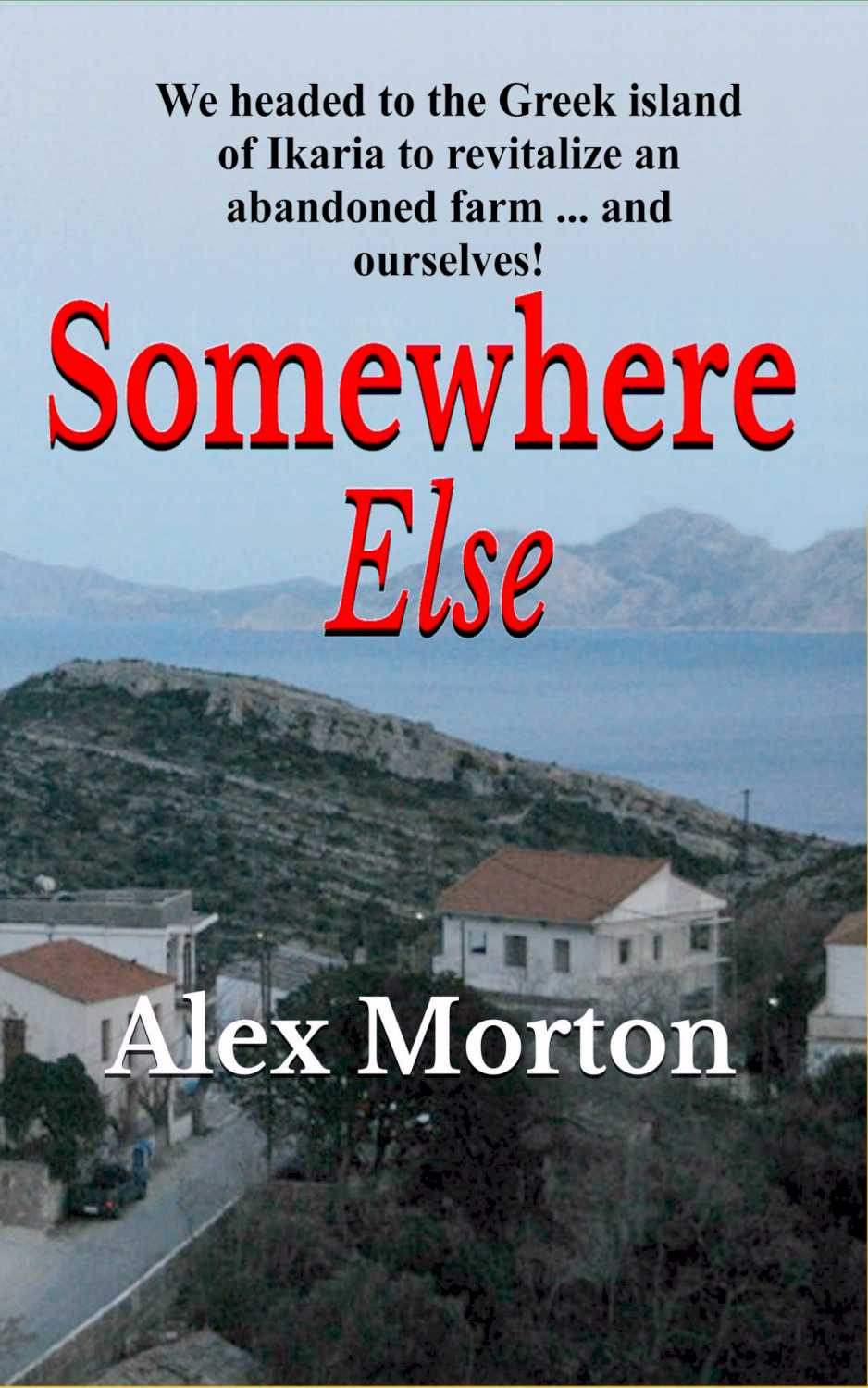
E. Writer I did not realize that was a shot that you had personally taken. How cool.
Alex Morton Mine is one from Henry Miller "Every day we slaughter our finest impulses."
E. Writer Our finest impulses rather than our worst.
Is the new year off to a great start so far?


Alex Morton And a happy new year to you and the rest of the folks in the Neighbahood.
E. Writer Happy New Year! Blessings to you and your family
E. Writer I just looked, it was posted in "how to use this forum" under movie talk.
Roy Scarbrough That's an old one. I tried again in the Television category. It just disappeared on send.
E. Writer Oh maybe it didn't go through
Roy Scarbrough no. It appears I missed a step. Looks like you have to first create a separate "topic" within the "category." I didn't know to do that.
E. Writer Ohhh ok. Like a subject line.