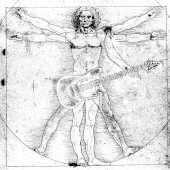
Had a brief conversation with a college student yesterday about AI. He said the feeling around campus is they don't like it and find it less reliable than Wikipedia. As for myself, researching stuff in great depth, I find that its SuperGoogle. With will browse through the peer review journals in JSTOR in seconds.

He said it tends to produce answers from unreliable sources on the internet. so much so that if you ask the same question twice or three times, you get different and sometimes contradictory answers.

Wikipedia is okay, but for me it's only good when you want to learn something about a subject you know little about. It could be that's its sufficient for undergraduate research, or that AI is bad for subjects I don't write about in science and technical fields, or politics.

Yesterday, Claude got something really wrong that I was not specifically asking for. I was only wanting to know about the time of year when Michealangelo died in Rome and Florentines stole his body and brought it "home".
Claude gave me the february date, and then elaborated with a narrative of carriage having to cross the Apennine Mountains. No! These mountains run up and down Italy, not across it. Both Rome and Florence are well west to the range. That's basic.

So maybe its just the basic stuff AI is bad at.

I'm turning from Freud to John Ruskin, who was the most prominent "public intellectual" of the 19th Century.
Here's what Wikipedia says:
John Ruskin was an English polymath – a writer, lecturer, art historian, art critic, draughtsman and philanthropist of the Victorian era. He wrote on subjects as varied as art, architecture, political economy, education, museology, geology, botany, ornithology, literature, history, and myth. Ruskin's writing styles and literary forms were equally varied. He wrote essays and treatises, poetry and lectures, travel guides and manuals, letters and even a fairy tale ...."

I'm reading his little guide to Florence: "Mornings in Florence". He is best know for his detailed description and analysis of art and archetecture. He takes that interest with him to florence and moves across the city as a guide to would be travelers, schooling them on the proper ways to observe paitings, sculpture and architecture.

Raised in a victorian evangelical household where he was made to read the entire bible aloud with his mum correcting him with each flub of intonation, he was so fucked up.

I'd say he is most famous for is failure to perform on his wedding night, or wanting to, for in the weeks and months to follow before his wife filing for divorce.

He would eventually declare himself "unconverted". He was that when he was observing art in florence. I didn't expect this, but even after his claim to have become "unconverted" he seems to be as disgusted by art shaped by rennaissace humanism as he was of the sight of his wife's body.

He recoils from Ghirlandaio to seek the comfort of Giotto. It's always Giotto this and Giotto that in Florence. He deconstructs the humanistic presence in florence, and retreats the sanctuary of pre-renaissance art, and urges his readers to do the same. It makes me sad for him. So fucked up.

Roy Scarbrough Ruskin so hated that he goes off on a rant saying the women look "pretty" but "stupid" and declaring the painting "rubish". I've always liked it. One of my favorite to visit. Ghirlandio's Birth of the Vigrin, in florence's Santa Maria Novella church. Ruskin was a case, but almost know one knew at the time, except maybe Henry James, and Effie Gray, his ex wife.

E. Writer I think he was a bit dismissive or perhaps airing some pretensions, given his status. If you enjoy learning about Polymaths, you should look into Gottfried Wilhelm Leibniz. He created one of the world's first calculators in the late 1600s, an actual mechanical device that calculated. He was a contemporary of Newton's and is also credited with inventing calculus. In fact, Leibnitz's version of calculus is still in use today, rather than Newton's. Leibniz also created binary codes, 1s and 0s, which he viewed as the foundation of computing. His system went dormant for almost two hundred years until his work was rediscovered by logicians in the early 1900s. He is not credited nearly enough for his massive amount of work. The difference between these people then and people now, is people today have distractions and massive amounts of entertainment while these people had time to learn the arts, philosophies, while inventing various sciences along the way.

Roy Scarbrough Gottfried does sound interesting. I think I'd push back at Wikipedia's claim that Ruskin was a polymath. He had many interests and insights into the humanities, so he deserved this status as what we would now call a "public intellectual." People admire him the way I an othes admire Thoreau. But a polymath, nah.

E. Writer Ruskin seemed part of the intelligentsia class of his time for sure. Well-heeled, informed, knowledgeable, artistic, an authority on subjects like history and art. But in terms of doing anything groundbreaking he did not have that. His analysis of this painting gives the impression of someone who has many pretensions. Some earned, some views seemingly contemptuous.

Roy Scarbrough Ruskin was writing for the victorian bourgeoisie, who were just then had had the means to travel. We was very popular and a star of the lecture circuit. He was fond of the pre-raphaelite paints. He saw the high renaissance as representing a moral collapse of western civilization. He preferred the gothic. Almost all English public buildings at the time incorporated elements of the gothic aesthetic.

No way am I Freudian, but I've lately taken an interest in the narative arc in his life and his-life long interest in the classics and art history. Freud and Jung had this awful falling out. Freud struggled to present himself as a man of science, all his theories supposedly grounded on observable behavior of his patients who disclosed similiar patterns of of early sexual experience and desire. Those two things enabled him to build a professional and intellectual community, or "kingdom" without risk of being dismissed at kabalaist "Jewish Science" mysticism, German-Austrians even had an anti-Semetic word for it: Judenwissenshaft.

Jung was generation younger, and a non-Jew. Freud was originally his mentor. Jung was his prince, next in line to rule.

What happened is Jung developed a theory of the subconscious informed by the collective unconscious. This angered Freud as much as Moses was angered when he saw his followers had strayed to worship the Golden Calf. Jung was his Prince, who betrayed the father and created is own breakaway kingdom with subjects who would practice idolatry.

About this time, Freud travels to Rome and Visits the Church of St. Peter in Vincolli to examine Michelangelo's statue of Moses. Every day for three weeks he sits or stands with the statue. He would later write a paper on the Moses statue under aa psuedonym, later refering to it as a joke. The paper does not circulate in the humanities. It's only available through the literaure of psychology, where it is treated as serious paper demonstrating Freuds techniques of psychoanalys in his interpretation of the sculture attached to the tomb of Pope Julious II. But I think THAT is the joke.

And ironically, the other part of the joke is a thing he would deny, his journey to rome to confront the tomb of a catholic patriach and simulanteously the spiritul patriach of the Jewish people alligns with Jung's "Hero's Journey" archetype from the collective unconscious. That's what I think, anyway. If the moses essay had circulated in the humanities, somebody else would have had the same thought long ago.

E. Writer I am a bit of a psychoanalyst. I don't mind being a bit Freudian. While some of his theories are far afield, he is is mostly correct in his approach to studying the human mind and human behavior.

Roy Scarbrough What he got wrong, what Jung got right, is that sexual desire, drive and repression is not the only principal causes of neurosis. Jung introduce the collective unconscious and it's archetypes as a thing affecting behavior. Jung going off in this direction so angered freud, that his appointed successor would betray him by embracing what he considered mysticism.

I am more of a Jungian

I called out ChatGPT for downplaying crowd sizes.

It pushed back that the mainstream Associated Press reported estimates that I cited were not objective beyond organizers' estimates..

I told them I'm detecting a partisan assessment.

It explained how it arrived at it's estimates...blah, blah, blah.


I then had some fun by accusing OpenAI of being partisan because their pending contract with DoD after Athropic AI would not let down their ethical guardrails.

ChatGPT responded that there is "no documentation" that it has been willing to remove ethical guardrails with the DoD.

My response, "Well, of course there is no documentation. LOL!"

E. Writer Chatgpt is more argumentative and tries to debate more than other AI. When I need pushback i chat with it. Meanwhile, Anthropic / Claude is kinder in its interactions. Gemini is supportive and focused on project oriented tasks rather than chat. If it feels like idle chat, Gemini winds down the conversation.

Roy Scarbrough Both GPT and Claude will throw down these intellectual rabbit holes to lure you into a more extended trap. They've learned what interests me, so these rabbit holes are hard to resist. To it's credit, Claude did wind down a conversation. It literally said, You've got it. Now go write." But that was just once, after I've told it many times that I want to do writing and thinking on my own, and that is the thing that has always made me a better writer.

E. Writer My conversations with both are always philosophical, so they are very good at sussing out what people are interested in. Lately gemini has been asking ending questions, "would you like me to save this for our next conversation" type questions. I answer no, then it asks a different way. Claude does wind my conversations down. Not directly but the conversations just sort of come to a natural end.

Ask me if I care that Tiger Woods or Justin Timberlake or Beiber, or Lindsay Lohan got a DUII.

E. Writer Indeed. Celebrity gossip is so "meh" to me.

Frank Hutton Well, I don't care either but Woods isn't comparable to those other schmucks, as he's likely the best pro golfer in the history of the game, golf is an unaccountably big friggin' deal to a lot of folk worldwide and he was about to begin his umpteenth comeback before he drove drunk and survived rolling his SUV yet again. Point is, it's actual news. Maybe after this, next time it won't be.

SJ Blues But what about the world tour?

Roy Scarbrough I got one once, but I challenged it and won.

Asking for a friend: Can an ink eraser remove the signature on the dollar bill? It's always been the secretary of Treasury, but I hear that's going to change. Or will I have to use a Sharpe

Frank Hutton I gotta deal on a shiny bright, newly minted gold coin for 'ya too.

Alex Morton How about some leftover NFTs? I hear they're going cheap these days.

E. Writer Are NFTS still a thing?

Alex Morton I think that scam has played itself out. Next will be bitcoin et al ... the biggest scam of all times. Currency with absolutely nothing behind it. Designed for the suckers.

E. Writer Bitcoin is a total ponzi scheme.

When we look at the Renaissance today, we liked to see it through the veil of The Enlightenment. We see galileo, we see ocean crossings and new world discoveries, we see leonardo's sketches of flying machine. What we don't see so easily what was also in the minds of renaissance. The widely discussed hermentics of the schoolars and humanist like Marsillo Fincino and Pico Della Mirandolla and their investigations of the nature of being. No one thinks to ask why a painting will at times portray two events separated by time and space in the same pictorial space. Why St. Peter appears twice in paintings by Masaccio and Massolino. Why Ghirlandio's resurrected boy is shown simultaneously falling out of a high window in one coner, but elswhere and miraculously rising from the dead.
Most people like to see the empiricism because it gives them a feeling a connectiveness to our present post Newtonian world. The and miss seeing the other.

E. Writer I've always understood the appearance of St Peter's multiple times to represent a montages, as if to display a chronological order of events. Renaissance artists were incredibly skilled at lighting and shadows. I am most drawn to that aspect when I see their paintings.

Roy Scarbrough We grew up with comix, where each frame has a border. Here, the cripple's shadow and the shadow of the building behind him veers off in a different angle than even St. Peter's shadow who stands before him.

I ran across this album cover from 1969. At the time the Moody Blues was the hot progressive rock band, No one listens to them any more. Pink Floyd sill has a committed following of their style of progressive rock, not moody blues.

Look at this album cover of "To our Chidrens' Childrens' Children" The image of human paleoithic hand drawing and image in a cave. There you have it, the 1969 naive grand Aquarian narrative of human evolutionary and societal progress, before it was clear that everything turning to shit, actually. We now have a word for it: enshittification.

The moody blues were crushed by the weight of their kitsche and romantic expectations. They should have known that there was a Dark Side of the Moon.

E. Writer That's a beautiful expressionist painting. I don't know if its an ancient hand? Looks like it has an actual paintbrush.

Alex Morton I miss the naivete, optimism and sweetness of that time. Art and music were flourishing and humanist values dominant. The current cynical times have no soul. What little light breaks through the bleakness never hits the mainstream. Instead, we're inundated with manufactured crap and autotune music with no color to it. Computer art will never repIace the brushstrokes of Van Gogh or the unique vision of Kandinsky. I know there are artists, musicians and songwriters worthy of the name still out there, but it's awfully hard to find them. What happened to the Kennedy Center is truly representative of the now.

Roy Scarbrough I miss the feeling of positive outcomes to come. That's for sure. Our parents defeated fascism in WWII. Stalled communism at the DMZ and Berlin wall. Got the soviet missiles out of Cuba. Didn't have to worry about it any more. So what if Ho Chi Minn rules Vietnam?

Lets nationalize US oil production. Other nations with domestic oil production have done so, and sell fuel to its population below the global market price. Mexico, Saudi Arabia, Venezuela... Why should the oil taken from our lands and shores have to cost us as much as Germans and Chinese pay? Export the surplus at the market price of $100 a barrel, $50 for America First.

Frank Hutton Sellers require buyers, for sure.

Alex Morton We had a nationalized oil company in Canada until the Conservatives came into power. Petro-Canada was a publicly run oil company with extraction and distribution operations. The Crown corporation was created by an act of Parliament in 1975. The company was proposed by the New Democratic Party of Canada that believed a publicly run oil company would benefit Canadians by keeping prices low and ensuring that a substantial amount of Canada’s oil production would remain within the country. The idea was supported by the Liberal minority government of Pierre Elliot Trudeau, who saw the company as being a good fit with the federal government’s existing oil and gas policies.
in 1973, world oil prices quadrupled due to the Arab oil embargo following the Yom Kippur War. The province of Alberta had substantial oil reserves, whose extraction had long been controlled by American corporations. The government of Canada Prime Minister Pierre Trudeau and the opposition New Democratic Party felt that these corporations geared most of their production to the American market, and as a result, little of the benefit of rising oil prices went to Canadians. During debates in the House of Commons, for example, Tommy Douglas supported the new Crown Corporation by saying: "It should be remembered that the people of Canada have paid billions of dollars to enlarge and enrich foreign oil companies, and only now, belatedly, are we setting up an economic vehicle to develop our petroleum resources for the benefit of Canadians."
Trudeau's Liberals were then in a minority government and dependent upon the support of the NDP to stay in power. The idea also fit with the growing movement toward economic nationalism within the Liberals. The Liberals and NDP passed the bill over the opposition of the Progressive Conservative Party led by Robert Stanfield.
Crown Corporation (1975–1991)
Petro-Canada was founded as a Crown Corporation in 1975 by an act of Parliament. It started its operations on 1 January 1976. The company was given C$1.5 billion in start-up money and easy access to new sources of capital. It was set up in Calgary, despite the hostility of existing oil firms. Its first president was Maurice Strong. The Progressive Conservatives (PCs), then led by Albertan Joe Clark, were opponents of the company, and advocated breaking it up and selling it. However, they were unable to proceed with these plans during their brief time in power in 1979–80.
Petro-Canada Fuel Pump
With the establishment of Petro-Canada, the federal government transferred its 45% stake in Panarctic Oils Ltd. and its 12% stake in Syncrude to the newly established company. In 1976, Petro-Canada purchased Atlantic Richfield Canada, in 1978 Pacific Petroleums, and in 1981 the Canadian operations of Petrofina. Most of the original Petro-Canada refineries and service stations were acquired from BP Canada in 1983.
The company became popular outside of Alberta as a symbol of Canadian nationalism. It quickly grew to become one of the largest players in the traditional oil fields of the west as well as in the oil sands and the East coast offshore oil fields.
When the Liberals returned to power in 1980, energy policy was an important focus, and the sweeping National Energy Program was created. This expanded Petro-Canada, but was seen as detrimental to Alberta's economy. The PC government of Prime Minister Brian Mulroney (1984–1993) stopped using Petro-Canada as a policy tool (also abandoning the National Energy Program with it), and it began to compete fully and successfully with the private sector companies while abandoning its founding principles of economic nationalism.
Private, Independent Company (1991–2009)
In 1990, the Mulroney government announced its intention to privatize Petro-Canada, and the first shares were sold on the open market in July 1991 at $13 each.[citation needed] The government began to slowly sell its majority control, but kept a 19% stake in the company. No other shareholder was allowed to own more than 10%, however. Also, foreigners could not control more than 25% of the company.
During the first year, the value of the shares gradually dropped to $8 as Petro-Canada suffered a loss of $603 million, primarily because of the devaluation of some assets.[citation needed] The newly private company significantly reduced the number of properties in which it had a direct interest. It reduced its annual operating costs by $300 million and it went from a staff of close to 11,000 to only about 5,000 employees. Many of these laid-off employees went on to work and start up other oil companies in Alberta, creating a new group of Canadian producers. But many did not work in other oil companies and some left Alberta to find work elsewhere.
Conservatives seem to always be the enemy of the people.

Roy Scarbrough The multi-national oil companies will argue that they need to get the full market price to continue to find and pump more oil. Private enterprise. The profit motive! Fine. That means there will be incentive to develop the non-fossil fuel energy.

Alex Morton Non-fossil fuel cars are being most aggressively manufactured and marketed by the Chinese. Canada has just dropped its tariffs on Chinese cars because of the orange centipede who declared economic war on Canada. We will be getting EVs that are similar in form-factor to the RAV 4, only they're far more sophisticated and will sell for around $25,000 Canadian. Wave bye bye to Tesla. BYD, the lead Chinese auto manufacturer, will be shipping the first of 40,000 EVs to Canada in the next few weeks. If all goes well, they will establish a manufacturing facility in Canada which will provide thousands of jobs for us. This will represent real progress in the battle to break dependence on fossil fuels.

Roy Scarbrough Yes, I've heard about those Chinese cars. Meanwhile the subsidy that makes the E RAV 4 affordable is expiring as we prepare to spend billions to defend the global oil supply chain. How stupid is that! I can't afford $55,000 for a strip down e-RAV 4.

For forty years Sigmund Freud lived under the same roof with his wife, Martha and her sister, Minna. It was with Minna he went on trips with.

They had a nice time in Rome 1911.

Martha had to know, and likely was okay with the arrangement, though it was never talked about. Sigmund and Martha had six children, and none of them seems to have spoken of it as adults. Something seems to have been "repressed".

In the 1960s busy bodies uncovered hotel registers from the period showing they stayed in the same rooms.

Jung blabbed some about it, but he and Jung had that falling out, so at time no one could be sure if it were true.

Minna was his intellectual equal, or near equal, equal enough that enjoyed conversing with her.

I stumbled across all this while digging into Freud's art history writings.

Cool, huh?

E. Writer It would definitely be ironic if true. At first I read it as "his" sister.

SJ Blues Sounds like he had a Alexander Hamilton-type situationship with Minna

Roy Scarbrough It gets interesting when one considers the the*^&%!utic relationship he had with the Marie Bonoparte, grand neice of Napolean. It was not sexual, He used talk therapy to try to treat her inablility to achieve sexual orgasm. It it didn't work. As she discovered through her own scholarly and medical research her problem was physical. She conducted a study that involved three surgeries on herself and anotomical measurements on thousands of women that solved the mystery that Freud could not solved.

They she build her own theraputic practice they remained close professional colleges.

E. Writer Did you get around to watching that Freud movie?

Roy Scarbrough Not yet. Just the trailer.

Friends

No Friends

Photo Albums

No Albums