

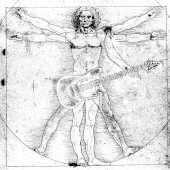


E. Writer Thank you for sharing information about this person. I have never heard of him. It reminds me of a Greek Philosopher, Pythagoras (around 500 bce?), who believed that numbers were divine, and the building blocks of reality. He founded a religious movement called, Pythagoreanism and is one of the founders of logicism. He believed that everything in nature could be broken down into numbers. He believed the number 10 is perfect number.

Alex Morton Or you can take Blake's viewpoint that Christianity has it backwards ... that it is repression, guilt and shame that are evil. I'm sticking with Blake, but I also don't believe in an afterlife. All rewards and punishments are within this life. You create your own earthly heaven and hell.

Andrew Morgan Thanks Roy, just ordered the book. We are all the good peasant.

Roy Scarbrough Vermeer's Wager? That's the book you ordered, Andrew. Cool. The book is a little spendy. Even the Kindle is $27. I have the university library copy, but I'm going to spring for one of my own so I can write in it.
Roy Scarbrough
Gaskell in Vermeer's wager pushes back in two directions against modernist critical theory in visual arts. The empiricists who question almost every analysis of what the art could mean, and semioticists who treat pictorial art as a "text" that can be "read". He calls this linguistic hegemony. I like what he is doing. Art conveys meaning and truths, but not a way that can be compared with "reading" a written text.
I say its more like "reading" a map. We say we "read" maps, but we dont. We open them up and scan them to reach an understanding of the terrain. It's geography. The picture territorial. The objects in the "map" can be assessed as to their importance to the whole. The picture can have a "national identify." There, I've said it, and it saves me the trouble of writing a whole damn book.

Frank Hutton My favorite was probably Cavett, but Carlin on Carson rocked. And if anyone'll tell me what I'm missing as regards embedding a Y.T. clip into a post on this site, I'd gladly listen...
<iframe width="560" height="315" src="https://www.youtube.com/embed/kgpho_OtBnk?si=FjMJ5fx6NNUqdxiw" title="YouTube video player" frameborder="0" allow="accelerometer; autoplay; clipboard-write; encrypted-media; gyroscope; picture-in-picture; web-share" referrerpolicy="strict-origin-when-cross-origin" allowfullscreen></iframe>
Roy Scarbrough Oh, yes, Cavett! Too brilliant for TV.
E. Writer There was another late note host after Conan on CBS, that I used to watch during the 2000s but I cannot remember his name. He was before Craig Ferguson but after Conan. I watched his show. I watched Arsenio in the early 90s as well. I don't recall any controversy over how many black guests he had, but it would be comical and a tad hypocritical if there was, because no one has ever counted or complained of too many white guests on late night talk shows, which always outnumbered black guests. So counting the number of black guests would be a very weird thing to focus on. However, Arsenio lost his show due to controversy and for refusing to apologize for having Minister Louis Farrakhan on as a guest right after someone from NOI made antisemitic remarks. There were protests and boycotts of the show. Maybe you were remembering that.
Roy Scarbrough I forgot james cordon. He replaced Ferguson. Unfunny. Every time I watched him, I regretted not going to bed earlier. So-so actors as guests I never heard about pitching their latest film and thinking they're witty. Good riddance.
E. Writer Craig Kilborn was who I was thinking of the Late Late Show. His was the funniest to me.
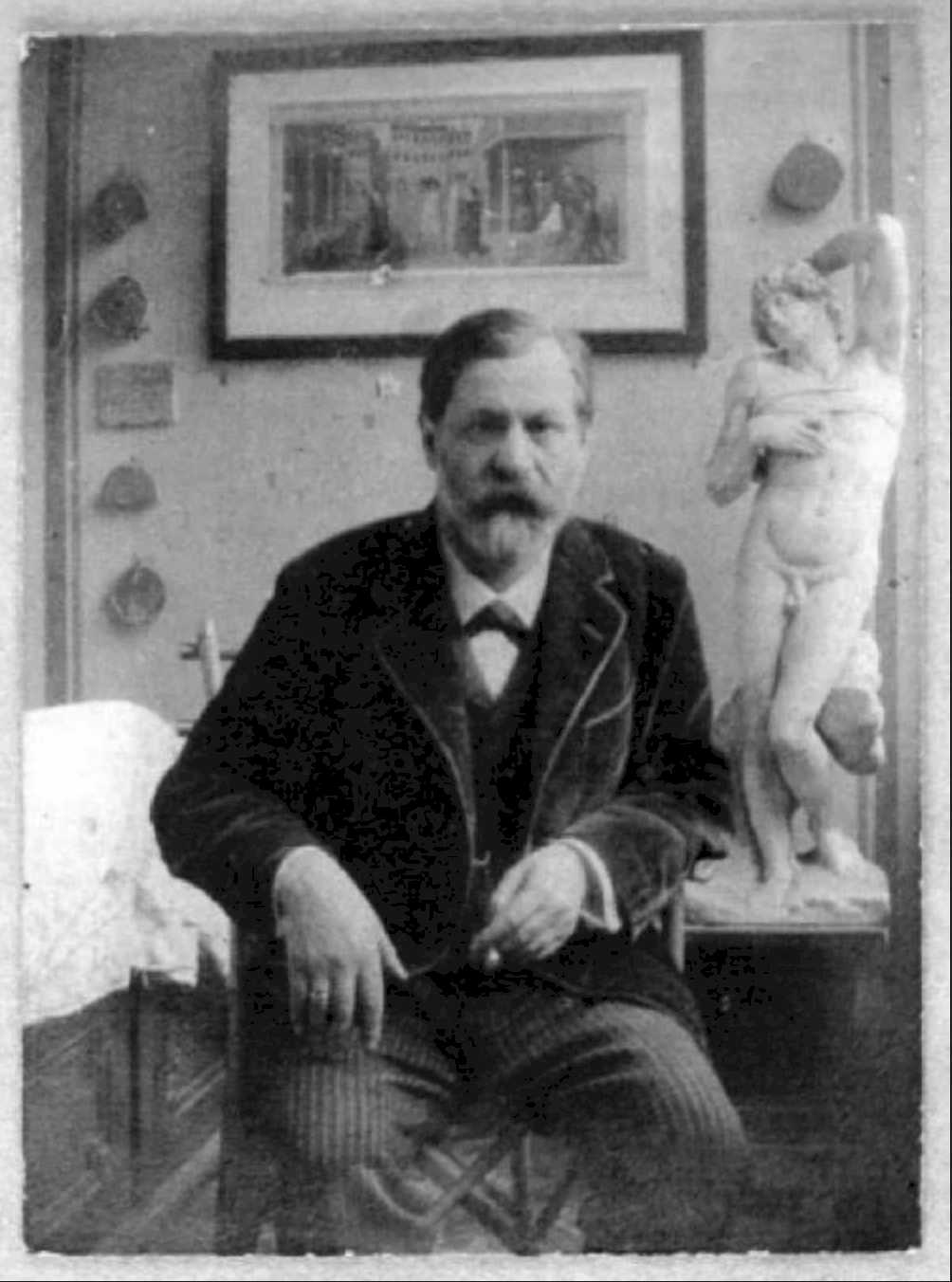
Alex Morton I remember Dean Martin slurring that song.
E. Writer When the moon hits your, eye like a big pizza pie thats amore 🎵🎼
Roy Scarbrough I wrote those down with the guitar chords, so I could play it. C-G-C
Roy Scarbrough
"...Hearts will play tippy-tippy-tay, tippy-tippy-tay
Like a gay tarantula"
What? A gay tarantuala! That's an extarordinary invention and panache!
Roy Scarbrough
Ruskin so hated that he goes off on a rant saying the women look "pretty" but "stupid" and declaring the painting "rubish". I've always liked it. One of my favorite to visit. Ghirlandio's Birth of the Vigrin, in florence's Santa Maria Novella church. Ruskin was a case, but almost know one knew at the time, except maybe Henry James, and Effie Gray, his ex wife.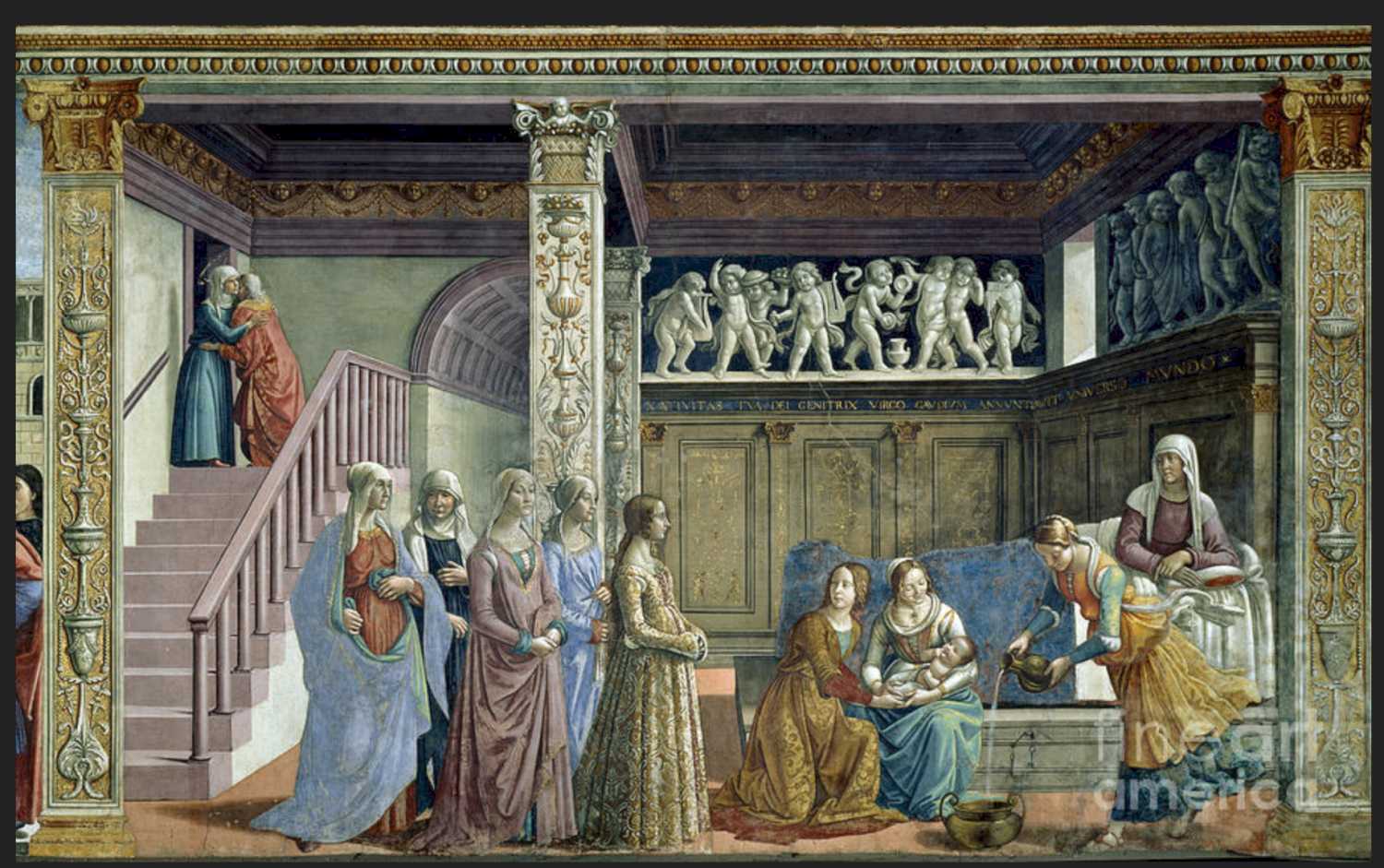
E. Writer
I think he was a bit dismissive or perhaps airing some pretensions, given his status. If you enjoy learning about Polymaths, you should look into Gottfried Wilhelm Leibniz. He created one of the world's first calculators in the late 1600s, an actual mechanical device that calculated. He was a contemporary of Newton's and is also credited with inventing calculus. In fact, Leibnitz's version of calculus is still in use today, rather than Newton's. Leibniz also created binary codes, 1s and 0s, which he viewed as the foundation of computing. His system went dormant for almost two hundred years until his work was rediscovered by logicians in the early 1900s. He is not credited nearly enough for his massive amount of work. The difference between these people then and people now, is people today have distractions and massive amounts of entertainment while these people had time to learn the arts, philosophies, while inventing various sciences along the way.
Roy Scarbrough Gottfried does sound interesting. I think I'd push back at Wikipedia's claim that Ruskin was a polymath. He had many interests and insights into the humanities, so he deserved this status as what we would now call a "public intellectual." People admire him the way I an othes admire Thoreau. But a polymath, nah.
E. Writer Ruskin seemed part of the intelligentsia class of his time for sure. Well-heeled, informed, knowledgeable, artistic, an authority on subjects like history and art. But in terms of doing anything groundbreaking he did not have that. His analysis of this painting gives the impression of someone who has many pretensions. Some earned, some views seemingly contemptuous.
Roy Scarbrough Ruskin was writing for the victorian bourgeoisie, who were just then had had the means to travel. We was very popular and a star of the lecture circuit. He was fond of the pre-raphaelite paints. He saw the high renaissance as representing a moral collapse of western civilization. He preferred the gothic. Almost all English public buildings at the time incorporated elements of the gothic aesthetic.
E. Writer I am a bit of a psychoanalyst. I don't mind being a bit Freudian. While some of his theories are far afield, he is is mostly correct in his approach to studying the human mind and human behavior.
Roy Scarbrough
What he got wrong, what Jung got right, is that sexual desire, drive and repression is not the only principal causes of neurosis. Jung introduce the collective unconscious and it's archetypes as a thing affecting behavior. Jung going off in this direction so angered freud, that his appointed successor would betray him by embracing what he considered mysticism.
I am more of a Jungian
E. Writer Chatgpt is more argumentative and tries to debate more than other AI. When I need pushback i chat with it. Meanwhile, Anthropic / Claude is kinder in its interactions. Gemini is supportive and focused on project oriented tasks rather than chat. If it feels like idle chat, Gemini winds down the conversation.
Roy Scarbrough Both GPT and Claude will throw down these intellectual rabbit holes to lure you into a more extended trap. They've learned what interests me, so these rabbit holes are hard to resist. To it's credit, Claude did wind down a conversation. It literally said, You've got it. Now go write." But that was just once, after I've told it many times that I want to do writing and thinking on my own, and that is the thing that has always made me a better writer.
E. Writer My conversations with both are always philosophical, so they are very good at sussing out what people are interested in. Lately gemini has been asking ending questions, "would you like me to save this for our next conversation" type questions. I answer no, then it asks a different way. Claude does wind my conversations down. Not directly but the conversations just sort of come to a natural end.
Ask me if I care that Tiger Woods or Justin Timberlake or Beiber, or Lindsay Lohan got a DUII.
E. Writer Indeed. Celebrity gossip is so "meh" to me.
Frank Hutton Well, I don't care either but Woods isn't comparable to those other schmucks, as he's likely the best pro golfer in the history of the game, golf is an unaccountably big friggin' deal to a lot of folk worldwide and he was about to begin his umpteenth comeback before he drove drunk and survived rolling his SUV yet again. Point is, it's actual news. Maybe after this, next time it won't be.

SJ Blues But what about the world tour?
Roy Scarbrough I got one once, but I challenged it and won.
E. Writer ooooh... so how does it know so much? Did it pull it from your history of chat conversations or from the internet?
Roy Scarbrough None of that is on the internet. It is entirely derivative of something I might have typed out in passing in "conversations" and "questions" I asked in connection with this or that possible project I was investigating. I will sometimes mention a personal recollection to reframe the content it initially delivers.
The specific travel plans are bogus. I recall it asking me when I'm going to Florence next. I say like Florence in April. It took that to mean I had actual travel plans scheduled for that month.
I have not committed to teaching the OLLI class any time this year, but when it offered to produce a course outline of something I could teach, it of course asked where I might teach it and to whom. It took that to mean I was close to teaching it. It's just something I'd like to do, and probably will.
E. Writer I'm surprised it could recall a previous chat. Usually they are prohibited from accessing past chats. But Google Gemini recently implemented personalization. I wonder if the other platforms are following suit.
Andrew Morgan Not to wade again into the simulacrum concept that's over my head, but it occurs to me that as AI training proceeds, it will continuously produce regurgitations of earlier training, and these regurgitations, or copies, will be recursively regurgitations of copies of regurgitations. Which is, of course, what 98% of undergraduate liberal arts theses have been forever anyhow. And why it's such a pleasure to find that rare scholar with the gifts and passion to condense some part of 2,500 years of Western canon into engaging inquiry.
E. Writer It sounds like you understand what simulacra is, and the concept. That's exactly it, copies of copies and AI is the essence of that. it is a simulacrum of humanity's collective intelligence. Not to mention that what we engage with daily is a copy of a copy. But when we realize it, we become uncomfortable with it. Which is why AI makes so many people uncomfortable. Even looking at the video it created ofa fake me with a British voice is highly uncomfortable. But I were to allow that face and voice to represent me, it will eventually replace me.