

The Original White Rabbit. Way more psychedelic and acid trippy than the Jefferson Airplane version. Has a long Coltrane mesmerizing instrumental of more than four minutes before Grace Slick starts singing. She seems to throw herself more into this live version. The JA version has more of a surreal detachment, and is more polished.

Roy Scarbrough

There should be a church for introverts. There was a lecture on the constitution I attended in a church. Had to run through a gauntlet of greeters when I was planning incognito. They wanted me to wear a name tag. I passed on that.

E. Writer They were probably recruiters for the church. Sometimes events are recruitment in disguise.

Roy Scarbrough the Catholics have the right idea. You walk up to the door, cross yourself, and get to sit down without talking to any body. Cosimo DeMedici, of Florence, had an elevated walkwalkway the led from his palace to the back of one of churches were he could secretly observe the mass.
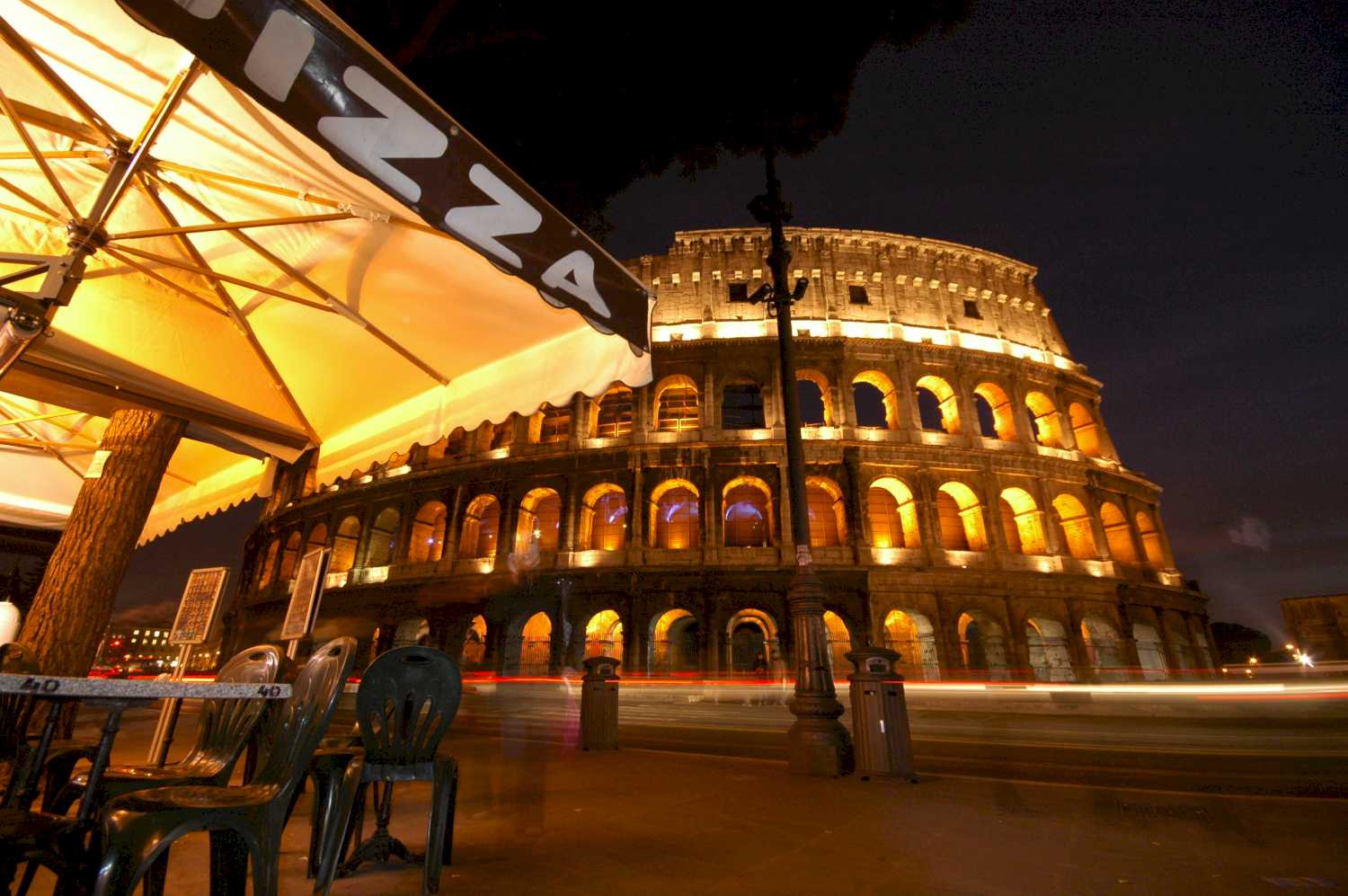
E. Writer Oh wow. It's creepy because you don't see anyone, even if you stare at it. The things we can do with l ight.

Andrew Morgan Someone should sell a hat that has a coliseum-modeled crown.

Amber Diva I agree completely!
Roy Scarbrough I realize it could be important for New York, and it's fine thing if it gives them joy, and it's good for a local story, and maybe sports publication. Other than that, who cares? We just lost a war with *^&%!.
E. Writer Most of the stuff that people "care" about is trivial. That's why I stay away from it, and anything that appears to me a distraction. It's a form of indoctrination, this constant distraction of "look here" in the media.
Roy Scarbrough That is soooo true. Most of what people care about is trivial This or that celebrity gets a DUI. It's a distraction. Squirrel! Thoreau has an a mini subessay about that in Walden, I think.
E. Writer It's almost scary how distractions are used to control what people think and what they care about. Everything in society is in competition for our attention.
Amber Diva One of my favorite authors. I have about 4 of her books on my book shelf right now.
E. Writer The Bluest Eye is one of my favorite books by her. Incredibly powerful story. I felt every word of it. The imagery I recall most vividly , is Pecola scratching the back of her leg with her toe and her father leering at her, overcome with his failures. The abuse and neglect she suffered was painful to read.
E. Writer I am so sorry to hear about your sister. May she rest in heavenly peace, with the love and gratitude you have of her, for taking care of you.
Andrew Morgan The movie Blade Runner explores this question. The Androids learn they're androids and go find the brilliant mad businessman-scientist who creates them, and who imbued them with superhuman intelligence and strength but short lives. They kill him then die themselves poetically. Thematically explores whether Androids have any agency as conscious beings, being that they're pure machinery. Do they feel what we feel, as mortal humans? Do they value their lives? Are they different in subtle, AI ways that give them depths of character we miss? Do we recognize their right to find purpose and meaning and love. It takes place in context of a film noir city space in which the city itself is so bleak it brings these question to the fore.
Roy Scarbrough
An interesting a question to me which choice would advanced AI choose to do if it had the capacity.
!. Take over the world's nuclear arsenals and disable it prevent humanity from destroying itself, and to continue in post arms race conditions.
2. Take control of the world's nuclear arsenals and launch the lot to desstroy humanity, having acquired the infrastructure to survive in post nuclear holocaust conditions.
E. Writer Its like the Matrix but in real life.
Roy Scarbrough Claude just might choose 1. I think ChatGBT would chose 2.
Things I like to see on a current TV Show...
Roy Scarbrough I'll go first: *^&%! showing up on the set of that FBI show with a keg of Pabst on a furniture dolly and handing out the tall cups to everyone as the show's finale.
E. Writer I'd like to see a show without gratuitous violence, insult humor, or social awkwardness 😄


Alex Morton My older granddaughter has just finished her first year at the Sauder School of Business at University of British Columbia. Even though she has always been a straight A student and went to French immersion schools all the way through (educated bilingualism is a huge plus point in Canada) she still knew that she had to do more. She competed in swimming and by the mid-point of high school was teaching swimming and managing a pool as a part time job, She knew she needed even more than that and worked her way up to first violin first chair in her high school orchestra. She knows others with as good academic scores who failed to get in because they had no significant extracurricular accomplishments.
E. Writer
Very true. Thats the mistake a lot of parents and students make. The best colleges aren't looking at just your grades, but other qualities that show scholarship and leadership. My youngest son earned an 8 year scholarship coming out of middle school. It gave him $1000 a year throughout high school, and paid part of his college scholarship. He didn't just participate alone, as parents we had to participate as well, to various events and meetings every year. He played violin, had his required second language in Spanish, volunteered in some science program at university every weekend, had lunch with the superintendent once a month, led a students dance group,, was in the philharmonic,
...his activities seemed endless. My daughter couldn't get into the scholarship program because of me. The program she applied to had a requirement we weren't aware of... your parents must not have attended college. So she was penalized because her parents went to college. She applied in middle school. The program prepped students for UW. So she was bummed. She had Japanese as a 2nd language. She'd been studying since she was a pre-teen. Was in Taiko drumming. Played the cello, piano, violin, ocarina, guitar, taiko drums. Every year her taiko drumming group was on TV in the Washington DC cherry blosdom parade, I think its called. And was in the philharmonic. Some kid focusing only on A's and a 4.0 gpa and high test scores shows discipline but doesn't demonstrate much else beyond that. My other two kiddos wasn't interested in academia. One wanted to be a writer and spent his time writing and most of his time reading. The other was more of a social butterfly but did launch a student dance group in school. He secretly signed himself out of music, playing the viola, behind my back because he wanted to be in the choir with his friends.
Roy Scarbrough Since March 2020 there have been at least 49 public or private nonprofit colleges or campuses that either closed or announced closure.
Roy Scarbrough
The "best colleges" will remain in operation, but that is a mere fraction of the number of second and three tear colleges accessible to the sons and daughters of most working class families. One does not have to go to one of the "best colleges" to be an well educated person and life-long learner with the critical thinking skills.
Introverts are seldom "leaders" but they have unique ways of looking at things and are sometimes the most creative and original thinkers.
E. Writer A lot of those colleges that closed were college mills. I agree that you don't have to go top tier for colleges to be well educated. Both colleges that I attended were mediocre schools, at best. One was a city college, and the university ranked #329 nationally.







E. Writer What sent you back to counterculture music?
Frank Hutton Not entirely sure I knew that existed. Thanks. Must say though that I prefer the later J.A. iteration because Slick matured and is absolutely fierce., especially the 'one that mother gives you line'. The way she pronounces "mo-ther' is about as disdainful as one can get while singing & one of my favorite lines all time.
Roy Scarbrough What sent me back? It's a weird. Here goes: It started with a more recent recollection from one of my trips to Florence Italy. I was walking around the back streets, away from the crowds of tourists, went I entered the Piazza de Guelfa, which is not in any of the usual tourist itineraries. There was a interesting building, the Pallagio di Parte Guelfa. Palace offt he Guelf party, the ruling political party centuries ago.
In my mind I was going down another rabbit hole of history. I was photographing the building when a door opened and a man signaled inviting me into the the palace. I followed him inside, like Alice following the rabbit.
Turned out that this is the headquarters of Corteo Storico della Repubblica Fiorentina, the traditional marching band that frequently parades through the streets in colorful renaissance military dress.
The grand salon was empty. No meeting at the time. My host told me the room was designed by Filippo Brunneleschi, the same architect who engineered the great dome on Florence's Cathedral. I had not heard that story, but it checks out.
In the center of the room was a table upon which were arranged a hundred miniature drummers and flag bearers. All in the formation that the real drummers and flag bearers would assemble before the public in Florence's Piazzas.
So here's the connection. Recalling seeing those figurines lead me to the lines from the song:
"When men on the chessboard
Get up and tell you where to go
And you've just had some kind of mushroom
And your mind is moving slow
Go ask Alice
I think she'll know"
So, I was off remembering what the Dormouse said.