


Some days I actually learn something from Facebook strangers, and it makes a connection with some experience.
Yesterday there was a repost of a short article of how some female frogs will pretend to be dead to discourage unwanted attention from males. It is among the few species that will play possum.
As soon as I read that I recalled an eerie experience.
I had hiked deep into Dante’s dark woods in the Apennines when I happened upon this peculiar and eerie phenomenon of nature that has long puzzled me, until I read the article.
The trail followed a stream through dense woods, then at one point rounded a small dark pool, about 15 below at the bottom of an embankment too steep and slippery to climb. A small waterfall from the stream above landed into the pool.
It was there that a monstrous frog floated lifelessly on its back. She looked bloated to me, but her color was bright, and she was larger than any frog I have ever seen, about the size of a melon, floating on her back, circling, slowly circling, around the wake of the waterfall.
I would have investigated and photographed if the bank were not so precarious. I was alone, so I did not risk a descent into this dark pool. A difficult balancing act, that would be. There was no Virgil to guide me.
It was, after all, near where Dante set the gate to Hell.

Roy Scarbrough
Romantic notions about nature is a fairly recent attitude in western thought. It was most often considered frightening. Once you walked beyond the walls and gates of a fortified town, you were pray for animals and robbers. Crimes were often punished with exile. Dante was one of those so punished.
An exception was Leonardo Da Vinci, who loved traipsing out among mountains and streams. Some of his paintings show sublime and wild landscapes in the backgrounds.

E. Writer That's because people fear what they don't understand and ancient people had limited understanding of nature beyond its hardships and mysteries. Ancient people thought the sun revolved around earth or that their deities controlled the stars and the sky, or even thought that an eclipse signaled the end of the world. People took what they needed to build or eat and that was the end of it. No room to observe nature or appreciate its magnificence beyond the hardships of their time. So I don't think admiration of nature as romantic, but as a sound intellectual appreciation of nature's brilliance, power, and beauty. Every time I'm in my garden I'm admiring how a beautiful little flower can produce a fruit, like a tomato. Da Vinci's landscapes could be said to show nature in a very romantic "light."

Alex Morton Eastern thought immersed itself in the beauty and serenity and acceptance of nature as is clear in the Chinese poets of a couple of thousand years ago, Li Po and Tu Fu, and of course the taoism of Lao Tsu while Western thought, so many years later, in the nineteenth century, was mired in trying to decode nature ... ie, Tennyson's "nature red in tooth and claw" in an effort to rationalize the chasm between what is expected of a world in the arms of a god who allows the ultimate cruelty of death and preaches love in the same breath. This, in the mid to late nineteenth century when naturalists were cataloguing the flora and fauna of the world and reveling in it. Then along came Darwin and that really confused the issue. Suddenly, there was a structure beyond the cataloging ... something that tied it all together outside of the idea of an overarching god creating it all in one fell swoop. Imagine the turmoil in 1842 when dinosaur fossils were first brought to the attention of the world and the name created in 1858?
Alex Morton Speaking of nature red in tooth and claw, just when I was feeling all philosophical and comfortable, a huge black bear wandered down our driveway. Probably on his way to a spot near the sea where the blackberries are just starting to ripen. He took his time, just ambled along, sure of himself as the king of the mountain. Eventually, he vanished into a clump of bushes and like some magical being, never reappeared. He must have crossed the road, somewhere, but not that I saw.
E. Writer
Alex we might argue about dinosaurs. I don't believe in the concept of dinosaurs. Prehistoric animals, yes, animals existed. Giant voracious violent lizards roaming the planet, all dying in one fell swoop is science fiction. It was less exciting than that. Trex and chicken share a genetic ancestor. Birds are reptiles and direct descendants. The size of these fossilized materials (the organic material is no longer there, just the minerals) is due to hundreds of thousands to millions of years of sedimentation. Some animals were large like woolly mammoth which is a relative of the Asian elephant. Lots of science fiction in dinosaurs which I feel is an 18th century invention from the imagination of some very shady men https://www.nhm.ac.uk/discover/brontosaurus-reinstating-a-prehistoric-icon.html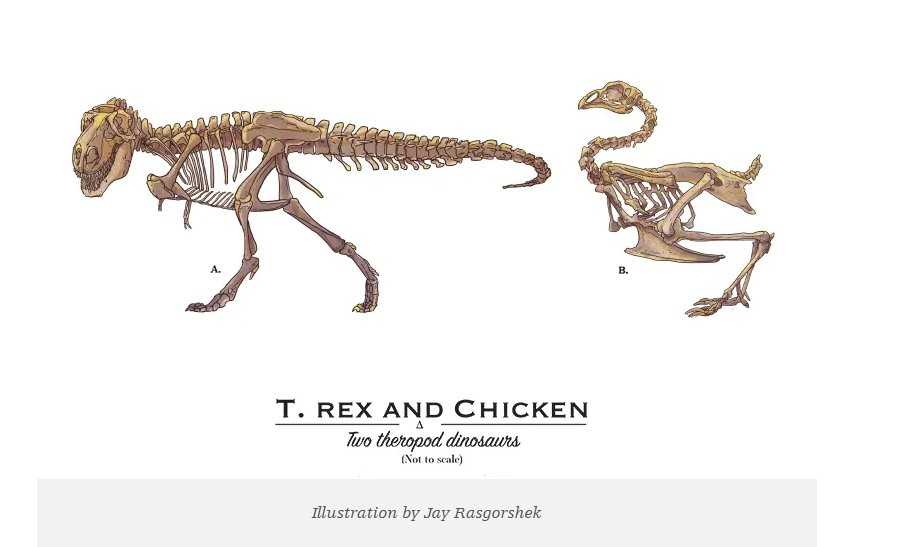
E. Writer I can't bring myself to use Facebook anymore and stopped using it years ago. I do have an account for posting ads and other information. Facebook is just too busy. There's too much noise and it keeps me from writing and focusing on books in my free time. The click-bait is excessive. So you end up getting sucked into posts or videos you can't look away from. Every time I go there, there's a video or something. Next thing you know, I've watched ten videos in a row. Fortunately, I have not seen any of those literature bots on Facebook, but that's because I refuse to feed it information so that it can track my behavior and use AI to lure me into getting too distracted to leave. In fact, maybe it noticed I can't look away from those videos and that's why the first thing I see are videos. The one thing I like about this site is no bots, and no algorithms that track your behavior. The disinformation is staggering as well. I use Facebook for running sponsored ads on books. That's it's primary use, and for a business page or two.
Alex Morton Facebook is the land of the lotus eaters come to life. I occasionally run ads on Facebook and most recently have been on to set up the Zoe orphans page. But getting caught up in a news feed is just asking to be programmed. I'll pass.
E. Writer Exactly. Everything there is click bait or disinformation.
E. Writer It is so interesting to me, how some stories stand the test of time and others are lost to posterity. I am glad you remember him and his story.
Roy Scarbrough
Another interesting factoid, Ishi became pretty well known after the 1964 Young Adult book, "Ishi, the Last of His Tribe", by Theodora Kroeber. Ms. Kroeber was an anthropologist married to Alfred Kroeber, who was among the UC anthropologist who took Ishi in and developed a profound bond with him.
Alfred and Theodora were the parents of Ursula K. Le Guin.
Roy Scarbrough
Culturally Native American, but complicated by circumstances. A crisis of identify. Raised in a NA family and community. And old plot device: Babies switched at birth. Traditionally that would no be a problem. It's a little different now as tribal organizations sometimes have complex commercial and they split the proceeds from these among their members, so there's vested interests in who is officially enrolled in the tribe and how many there are.
I'm acquainted with someone whose family included well documented historic connections to what is now two tribes, that were split up and moved to different states (Oregon and Oklahoma). She got disenrolled from the Oklahoma tribe after the board wrote up rule that you can't be one of them if you are eligible for another.
It broke her heart. "It's about money," she told me.
E. Writer I can see that. My great grandmother was a biracial, part Chemehuevie Native American. Most people have never heard of them. She was not on the roll, of course. But I don't think she considered herself as having that right. She identified as Black, though I believe her first husband may have been Chemehuevie. I'll have to look more into it. I have seen his photo only. He died at age 22 in 1920 or so. So your story is about an identity crisis. What happens if you belong to one group, but culturally belong to another? I had a friend, and we were out to lunch one day and I asked her, what is her nationality. Looking at her I could not tell. She said she was biologically white, but culturally black. Both of her biological parents were white, but observing her, she did not present as such. I thought she was a fair complexioned black woman. Her stepfather was black and she was raised in the black community, was a mother to black children. Her demeanor, speech, natural mannerisms, and even her career was within the culture, that I did not perceive her as a white person even after she disclosed her genetic background. She was biologically white, culturally black and fully embraced it. That's why I found your story interesting. It happens in real life across cultures.
Roy Scarbrough
Thank you for that. Those are some of the issues. My great grandmother appeared to be bi-racial. No one in the family talked about that, though my brother and I started wondering.
She was a very elegant looking woman who resembled the singer, Lena Horn. She sometimes sang gospel and country tunes on little radio stations down there. I last saw her when I was five years old. ( I still member a warm and loving vibe from her.) She later go in the business of fixing ladies hair, and developed compounds for straitening frizzy hair, which she also had. She studied up on the chemestry of that.
Ironically, she. had who son who became a terrible life-long racist
Her father, Dolph Carter, who could've been half-and-half migrated from somewhere in the deep south to rural east Texas where he built and operated a gristsmill, and with that became a prominent businessman.
I have to wonder how he navigated identity.
One thing I'm grateful for is that my branch of the family had the good sense to move out of the south, and that I was born in San Francisco.
Roy Scarbrough
Just to be clear, I can only identify as an American descended from Europeans. It would not be appropriate for me to appropriate anything beyond that. It is a curious thing, and should not be entirely surprising to anyone whose family has been in this country for 400 years, most of it in the south.
Lou Reed has this satire song in which the character is a "Fucked up middle class college student", who wants to be be black. Full of racist memes
https://www.youtube.com/watch?v=H-ksg_ZVn8s&t=24s
E. Writer Pure satire and commentary on appropriation by Lou Reed decades before people were conscious of what cultural appropriation means.. And no, you don't need to explain. I don't look at everything through the lens of oppression or social issues unless it's so blatantly disrespectful or dehumanizing that I have to stop and speak up. In other words, sometimes a cigar is just a cigar. I think people can write characters from other cultures if is respectful. I usually look for the subtext. Depending on the author, they may not be aware of the subtext. Or sometimes maybe they are. For example, I think Martin Scorsese, in terms of skill level is a solid director, but I dislike him because of the subtext in at least every single movie he makes. I write about different types of people all the time. But usually I don't even assign a race or even a culture, unless it's inherent to the plot. Just descriptions of what they look like. I allow the reader to draw their own mental picture. In your story of course, it is a person from a specific culture so that's a little different.
Roy Scarbrough One of my favorite books of my late childhood was "On Civil Disobedience," by Henry David Thoreau.
E. Writer Sounds like a sleepy town. Acts of civil disobedience is relative. In one place it might be throwing a brick through a glass window. in another, passing out flyers might have the community in a tizzy.
Last week were was a list of best films. I said i like Apocalyse Now. I should have mentioned Fellini. He embraces the absured and the Italian sense of resignation to presence of absurdity in life. I was walking through a busy neighborhood in rome one afternoon when I saw a man walking a big great dane on leash. There are no detached homes there. No places for a dog to run or exercise Only apartments, so that buy itself was an absurd sight on the crowded sidewalk. But here is the strangest part, the dog was carrying an inflated red balloon, gently in his teeth. Rome is like that. You see strange things like that, and then in a moment it is gone and you wonder if you saw it.
Another one, a woman riding a scooter, speeding in and out traffic, wearing a wedding gown, her train flapping behind.
My favorite Fellini films are La Dolce Vita and Otto e Mezzo
The opening shot of La Dolce Vita is of a helicopter hauling a large Jesus Statue through rome and is modern and ancient. The jesus handing by a cables, presumably for delivery someplace. The pilot pauses and hovers over a rooftop where three beautiful women are sunbathing.
E. Writer I have not read Heart of Darkness but I think you are right on the subtext and underlying commentary. Apocalypse Now feels like a fevered dream. There's a lot of subtext there.
Alex Morton What think you of Antonioni? Blowup and Zabriski Point were remarkable commentaries on society. The cinematography of Blowup was brilliant, and the last scene of Zabriski Point said it all as the little pieces of the explosion whirled in slow-motion back to earth. When I compare the films of Fellini and Antonioni to the current crop I'm deeply saddened by how mundane, shallow, cowardly and unimportant modern film has become.
E. Writer I have not watched either. But interestingly, we own a bunch of Italian movies / DVDs. My husband collects them, but mostly Italian horror movies of the lowest budget kind...of which I have not been a fan. He is an expert on horror movies, and a collector/historian of things.
Alex Morton I've never liked horror movies. There's so much of it in the real world, that I don't need a movie to remind me of it.
E. Writer I don't watch horror movies at all. I will watch a psychological thriller, like The Birds or Psycho, where it's a character-driven piece. I just feel that slasher horror movies desensitize us to violence in real life and then we wonder why America has so much random violence. But it's odd how we make exceptions for violence. We'll watch Silence of the Lambs, The Godfather or John Wick but then draw the line at slasher horror movies, even though they all feature people killing other people as a form of entertainment. I feel that gore is unnecessary. Gratuitous violence is unecessary. Even more so, after I watched Game of Thrones... I marathoned it, and after watching the entire thing over a weekend, I cannot stomach movie violence anymore. It should have been called Game of Murder because the entire show, while well-made, was about killing. They did not have a single episode where extreme violence or some form of torture p--n did not occur. And I wonder why Hollywood is so fixated on violence. Every new TV show on streaming a few months ago was about killers and assassins and it tells me quite a bit about American culture in general and the stories we glamourize and want to tell.
E. Writer Mainstream music has a tendency to blur the lines between different cultures and groups. That feeling you had must have sat deep within your subconscious for a long time. But music is meant to be enjoyed by all. A few months ago I posted here that I would be keeping a dream diary. I had a strange dream. In the dream, I began to drift . float out of bed towards the ceiling, like a helium balloon. I was upside down and stretching my arms out to my husband to pull me back before I floated away. He grabbed my arm and flung me back onto my pillow. I instantly woke up and we were laying exactly as we were in my dream. I promised to keep a dream diary after that. I always look for a connection or pattern, but since that day, I cannot recall a single dream when I wake up.
Roy Scarbrough
No heebee jeebees. I'm used to his tricks.
Here's a story. For several years, we had been meeting early in the mornings for coffee and literary talk, usually on the patio if the weather was nice.....
After a long visit at the table, we'd continue our conversations with a hike up a trail in the nearby woods, along a mountain stream that flowed from there into town....Every day when he was in town. (He was a storyteller performance artist and writer, so he was often out of town…)…We’d sometimes encounter deer, and occasionally A Great Blue Heron, fishing from the rocks.
A couple days after he died, I walked over to the coffee shop with my dog, early in the morning, again on the patio…My sweetgolden retriever, Mia. .After awhile Mia and I walked up the wooded trail with Mia on her leash. Still early. We were walking in the morning half light when we were startled my by sound of something heavy falling just behind my heels. It sounded like it could be a heavy limb falling from one the trees, and sort of like a deliberate stomp of someone wearing heavy boots. Mia lunged forward on the leash. I turned around, expecting to see a broken limb.
There was nothing there. He’d have thought that was funny, and so, so did I.
Yes he spoke in this last dream. I asked him what he had been doing all this time. He said, “just the stuff I always do.”
E. Writer Did you by chance write a story about this scenario? Where you were talking about a story you wrote a long time ago about this? For some reason I had Déjà vu of reading a short story similar to what you just told me. If you did not have a story like this, maybe I read one from someone else who wrote a story with a slightly similar theme, but not exactly like this one.
Roy Scarbrough I might have posted this account in GS3 sometime in recent years Nothing beside that. A curious Deja vu.
E. Writer That's probably where I saw it lol
Alex Morton Some trees have a life cycle and others seem to be damn near eternal. I have an olive tree so old that it sits in a corner by itself and just broods. It's sat in that spot for at least two hundred years, but it could be a century or two more than that. I prune it with great respect. Most trees want to be in an umbrella shape, but the old olive isn't interested in appearances or ease of harvest. It leans away from my neighbor's land, and neither that tree nor I like him, so we've always had that in common. and I trim the branches accordingly. I don't use an olive rake when its olives juice up and are ready for harvest. I hand pick them and keep them separate from the olives bound for the mill. They become special eating olives ... the kind you bring out for only the best company.
E. Writer
I had no idea that olive trees not only live that long, but still produce. This is a ridiculous comparison for your tree, which is growing in its proper Mediterranean environment, but Home Depot was selling olive trees a few years ago. They wete small plants, still growing. I grew a potted lemon tree that I had for 7 years that was from the same company. I left the olive tree, in its original pot outside for two weeks before moving to transplant it and within those 2 weeks it had already died. It rained a lot so I wondered if the roots drowned.
Roy Scarbrough
There's an ancient olive tree behind the table on the patio of campground where I sat drinking esspresso sometimes, sometimes a beer decades ago. This is ion the hillside overlooking Florence, Italy, with a view of renaissance rooftops and church steeples.
The olive tree is short, stubby and twisted, having made many turns of it's trunk over the centuries. I was just 19 when I was first in its presence, though hardly noticing it at the time. It was at that spot I had this overwhelming born anew feeling, triggered by the view and the art that was still in my mind. A feeling of being unstuck in time and at one with humanity.
Only a few years ago, I revisited that campground, and sat down at one of the tables. I looked over my shoulder, and fondly regarded the ancient olive tree.
E. Writer There is something very spiritual about trees. Especially when you consider what they do for our ecosystem and the air we breathe.
Alex Morton There are about at least fifty trees of varying ages.in my olive grove, In 1993, before we took over the place, a fire swept through much of Ikaria and burned a number of trees to the ground. They refused to die, but instead sprouted a ring of new trees around their blackened stumps and they're now fully grown and have been producing splendid olives for years. I also have many trees that I've planted and nurtured into mature growth, as well as several grafts that I've done on wild olive trees. It takes about two years for a grafted tree to begin producing, while a new tree grown from a sapling doesn't start producing for at least five years. It's all good. I planted an olive tree for each of my granddaughters when they were born and those trees are now thirteen and eighteen years old. They know that some of the oil that we ship back for the family comes from their olives. This year, I'll finally get a chance to plant one for my new grandson who is now 2 1/2. On other parts of the terraces, I've planted apricots, lemons, oranges, Mandarin oranges, peaches, figs and pomegranates. I planted two loquat trees, but their lifespan is a short one and now they're gone. I also have several very old almond trees that are way past their prime and produce almonds with shells so tough you can break nutcracker trying to open them. I've thought of replacing them, but I like the trees too much to cut them down. I am connected physically, psychically, spiritually and digestively with the trees. In harvest season, the oil on my hands from handling ripe olives, soothes my skin as I work and when I write, the keyboard smells like fresh olive oil.
E. Writer If you click your name on the top left corner, that's your page where all of your posts are separated on your wall. Only your posts and comments to your posts are seen there. You can also upload your profile photo, cover photo, etc. Only your posts appears on your page so everything you've posted so far is there. Your posts also shows up on the main feed where others can see it unless you set your post to "friends only." Then only friends can see it. I would leave every post set to public so that it can be seen on the main feed and anyone can comment. That aside, let's say you'd want a separate page from your personal one. You can create a separate page for a different purpose,. For example, your podcast, if you'd like a separate page for that you can create one under the same account. If you go to the top right side of your screen and click that arrow that points down, you will see "create new page" and then you can click that and create a second page. You can also create one by clicking "Business page." Either link will get you there.
So if you want a separate page that others can follow, that would be it. For example, my other page is here: https://neighbahood.com/page/view/28 - I separated this one from my personal page where I post about random personal things. The other page is the one that I promote publicly outside of Neighbahood.
As for the Podcast, that would be awesome if you launched one. I think you would have many listeners. I don't know if I told you, but my dream vacation is Italy and especially to see the Vatican (for the art and for the architecture) and I have not been. I am so envious when I see people on their Italian vacations. My first book was set in Italy and I paid such attention to it that one would think I had been there. Part of it is my liberal arts background studying art in college and the different periods, and of course the renaissance painters (though my favorite is the impressionists era).
E. Writer Here's how you see your page and how you create a second page from the current one if you need a separate one from your personal page for professional or artistic reasons.
Roy Scarbrough thank you!
E. Writer You're welcome 😉
Roy Scarbrough Yes, Italy is awesome. A lot of bang for your travel buck, So much stupendous stuff to experience in a confined area of that boot. Easy to get around by fast train.