

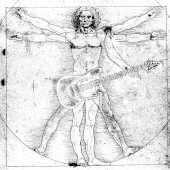

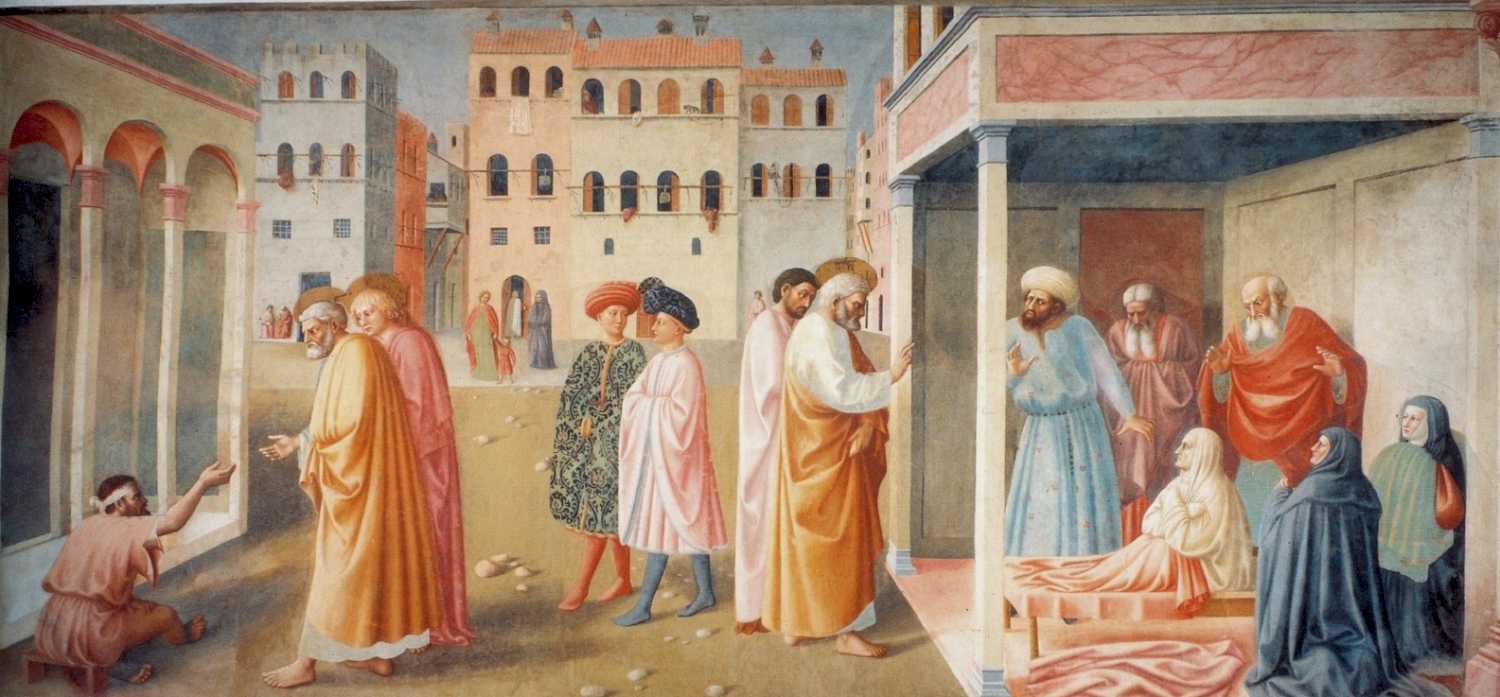

E. Writer I've always understood the appearance of St Peter's multiple times to represent a montages, as if to display a chronological order of events. Renaissance artists were incredibly skilled at lighting and shadows. I am most drawn to that aspect when I see their paintings.

Roy Scarbrough We grew up with comix, where each frame has a border. Here, the cripple's shadow and the shadow of the building behind him veers off in a different angle than even St. Peter's shadow who stands before him.
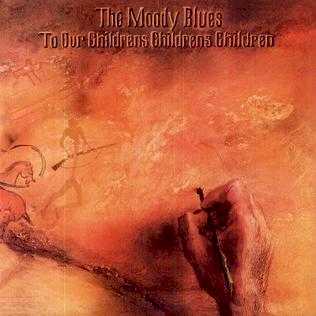
E. Writer That's a beautiful expressionist painting. I don't know if its an ancient hand? Looks like it has an actual paintbrush.

Alex Morton I miss the naivete, optimism and sweetness of that time. Art and music were flourishing and humanist values dominant. The current cynical times have no soul. What little light breaks through the bleakness never hits the mainstream. Instead, we're inundated with manufactured crap and autotune music with no color to it. Computer art will never repIace the brushstrokes of Van Gogh or the unique vision of Kandinsky. I know there are artists, musicians and songwriters worthy of the name still out there, but it's awfully hard to find them. What happened to the Kennedy Center is truly representative of the now.
Roy Scarbrough I miss the feeling of positive outcomes to come. That's for sure. Our parents defeated fascism in WWII. Stalled communism at the DMZ and Berlin wall. Got the soviet missiles out of Cuba. Didn't have to worry about it any more. So what if Ho Chi Minn rules Vietnam?
Lets nationalize US oil production. Other nations with domestic oil production have done so, and sell fuel to its population below the global market price. Mexico, Saudi Arabia, Venezuela... Why should the oil taken from our lands and shores have to cost us as much as Germans and Chinese pay? Export the surplus at the market price of $100 a barrel, $50 for America First.

Frank Hutton Sellers require buyers, for sure.
Alex Morton
We had a nationalized oil company in Canada until the Conservatives came into power. Petro-Canada was a publicly run oil company with extraction and distribution operations. The Crown corporation was created by an act of Parliament in 1975. The company was proposed by the New Democratic Party of Canada that believed a publicly run oil company would benefit Canadians by keeping prices low and ensuring that a substantial amount of Canada’s oil production would remain within the country. The idea was supported by the Liberal minority government of Pierre Elliot Trudeau, who saw the company as being a good fit with the federal government’s existing oil and gas policies.
in 1973, world oil prices quadrupled due to the Arab oil embargo following the Yom Kippur War. The province of Alberta had substantial oil reserves, whose extraction had long been controlled by American corporations. The government of Canada Prime Minister Pierre Trudeau and the opposition New Democratic Party felt that these corporations geared most of their production to the American market, and as a result, little of the benefit of rising oil prices went to Canadians. During debates in the House of Commons, for example, Tommy Douglas supported the new Crown Corporation by saying: "It should be remembered that the people of Canada have paid billions of dollars to enlarge and enrich foreign oil companies, and only now, belatedly, are we setting up an economic vehicle to develop our petroleum resources for the benefit of Canadians."
Trudeau's Liberals were then in a minority government and dependent upon the support of the NDP to stay in power. The idea also fit with the growing movement toward economic nationalism within the Liberals. The Liberals and NDP passed the bill over the opposition of the Progressive Conservative Party led by Robert Stanfield.
Crown Corporation (1975–1991)
Petro-Canada was founded as a Crown Corporation in 1975 by an act of Parliament. It started its operations on 1 January 1976. The company was given C$1.5 billion in start-up money and easy access to new sources of capital. It was set up in Calgary, despite the hostility of existing oil firms. Its first president was Maurice Strong. The Progressive Conservatives (PCs), then led by Albertan Joe Clark, were opponents of the company, and advocated breaking it up and selling it. However, they were unable to proceed with these plans during their brief time in power in 1979–80.
Petro-Canada Fuel Pump
With the establishment of Petro-Canada, the federal government transferred its 45% stake in Panarctic Oils Ltd. and its 12% stake in Syncrude to the newly established company. In 1976, Petro-Canada purchased Atlantic Richfield Canada, in 1978 Pacific Petroleums, and in 1981 the Canadian operations of Petrofina. Most of the original Petro-Canada refineries and service stations were acquired from BP Canada in 1983.
The company became popular outside of Alberta as a symbol of Canadian nationalism. It quickly grew to become one of the largest players in the traditional oil fields of the west as well as in the oil sands and the East coast offshore oil fields.
When the Liberals returned to power in 1980, energy policy was an important focus, and the sweeping National Energy Program was created. This expanded Petro-Canada, but was seen as detrimental to Alberta's economy. The PC government of Prime Minister Brian Mulroney (1984–1993) stopped using Petro-Canada as a policy tool (also abandoning the National Energy Program with it), and it began to compete fully and successfully with the private sector companies while abandoning its founding principles of economic nationalism.
Private, Independent Company (1991–2009)
In 1990, the Mulroney government announced its intention to privatize Petro-Canada, and the first shares were sold on the open market in July 1991 at $13 each.[citation needed] The government began to slowly sell its majority control, but kept a 19% stake in the company. No other shareholder was allowed to own more than 10%, however. Also, foreigners could not control more than 25% of the company.
During the first year, the value of the shares gradually dropped to $8 as Petro-Canada suffered a loss of $603 million, primarily because of the devaluation of some assets.[citation needed] The newly private company significantly reduced the number of properties in which it had a direct interest. It reduced its annual operating costs by $300 million and it went from a staff of close to 11,000 to only about 5,000 employees. Many of these laid-off employees went on to work and start up other oil companies in Alberta, creating a new group of Canadian producers. But many did not work in other oil companies and some left Alberta to find work elsewhere.
Conservatives seem to always be the enemy of the people.
Roy Scarbrough The multi-national oil companies will argue that they need to get the full market price to continue to find and pump more oil. Private enterprise. The profit motive! Fine. That means there will be incentive to develop the non-fossil fuel energy.
Alex Morton Non-fossil fuel cars are being most aggressively manufactured and marketed by the Chinese. Canada has just dropped its tariffs on Chinese cars because of the orange centipede who declared economic war on Canada. We will be getting EVs that are similar in form-factor to the RAV 4, only they're far more sophisticated and will sell for around $25,000 Canadian. Wave bye bye to Tesla. BYD, the lead Chinese auto manufacturer, will be shipping the first of 40,000 EVs to Canada in the next few weeks. If all goes well, they will establish a manufacturing facility in Canada which will provide thousands of jobs for us. This will represent real progress in the battle to break dependence on fossil fuels.
Roy Scarbrough Yes, I've heard about those Chinese cars. Meanwhile the subsidy that makes the E RAV 4 affordable is expiring as we prepare to spend billions to defend the global oil supply chain. How stupid is that! I can't afford $55,000 for a strip down e-RAV 4.
E. Writer It would definitely be ironic if true. At first I read it as "his" sister.

SJ Blues Sounds like he had a Alexander Hamilton-type situationship with Minna
Roy Scarbrough
It gets interesting when one considers the the*^&%!utic relationship he had with the Marie Bonoparte, grand neice of Napolean. It was not sexual, He used talk therapy to try to treat her inablility to achieve sexual orgasm. It it didn't work. As she discovered through her own scholarly and medical research her problem was physical. She conducted a study that involved three surgeries on herself and anotomical measurements on thousands of women that solved the mystery that Freud could not solved.
They she build her own theraputic practice they remained close professional colleges.
E. Writer Did you get around to watching that Freud movie?
Roy Scarbrough Not yet. Just the trailer.
British Metal Band: President.
Pretty good. Front man has a excellent voice, but the weird thing no one knows who he is. He wears a mask, and the whole world is trying to out and dox him.
E. Writer There's another story like this. Sone British rapper everyone thought was actor Timothee Chamaalet. He also wears a mask. Must be a thing.
Roy Scarbrough The interesting part of this is that it overturns and fractures the public and corporate expectations of personality cult monetized celebrityhood. I like that.
Frank Hutton Also, fame is a batshit crazy condition to try & live with. Gotta be real rich, to make it even sort of work.
SJ Blues I really like this. It's basically saying "Don't go into that quiet night" when it comes to age
Roy Scarbrough Martin's story is really interesting, a really fine guitarist who played for decades in Ian Anderson's Jethro Tull band. He was given few solo parts. He was not the frontman, but always a loyal and critical contributor to the sound with his riffs and flourishes. A few years ago, Ian disbanded the Tull band, with out telling Martin directly. And then later Ian restarted his band without the former bandmates. Meanwhile Martin form his own band for the first time.
Alex Morton SJ, that's a good paraphrase of Dylan Thomas's "Do not go gentle into that good night."
Roy Scarbrough That's right. Drink your way to the good night! I feel the same way, though. Stay for the credits. You always learn something watching them and listening to the music.
Lizzy Hale of Halestorm. Rock is not dead...yet
Roy Scarbrough those double Gibson guitars weigh about 30 pounds
E. Writer I miss the days when MTV and other video stations showed music videos. That was how I found new artists. I was a bit sad when they ended MTV for good this year. Now you've gotten me in the mood for some music.
Rainbow Kitten Surprise!
E. Writer The imagery has a very European feel to it. An almost "80s" feel to it. It feels joy, and transports to a different time.
Roy Scarbrough What I'm discovering is this kind of feel is still very much a thing, followed not by rock geezer set, but actively by gneration Z on places like TikTok and streaming platforms. Interesting how thoroughly the corporate music industry has marginalized it, but not yet defeated it. I like Bad Bunny too, but he really is mainstream glitz and showmanship,
Frank Hutton I gotta deal on a shiny bright, newly minted gold coin for 'ya too.
Alex Morton How about some leftover NFTs? I hear they're going cheap these days.
E. Writer Are NFTS still a thing?
Alex Morton I think that scam has played itself out. Next will be bitcoin et al ... the biggest scam of all times. Currency with absolutely nothing behind it. Designed for the suckers.
E. Writer Bitcoin is a total ponzi scheme.